Export a Ford Mustang GT to Japan: 2026 Cost Guide
Japan's zero-percent car tariff makes shipping a Coyote-powered Mustang GT across the Pacific far more tempting than most enthusiasts assume.

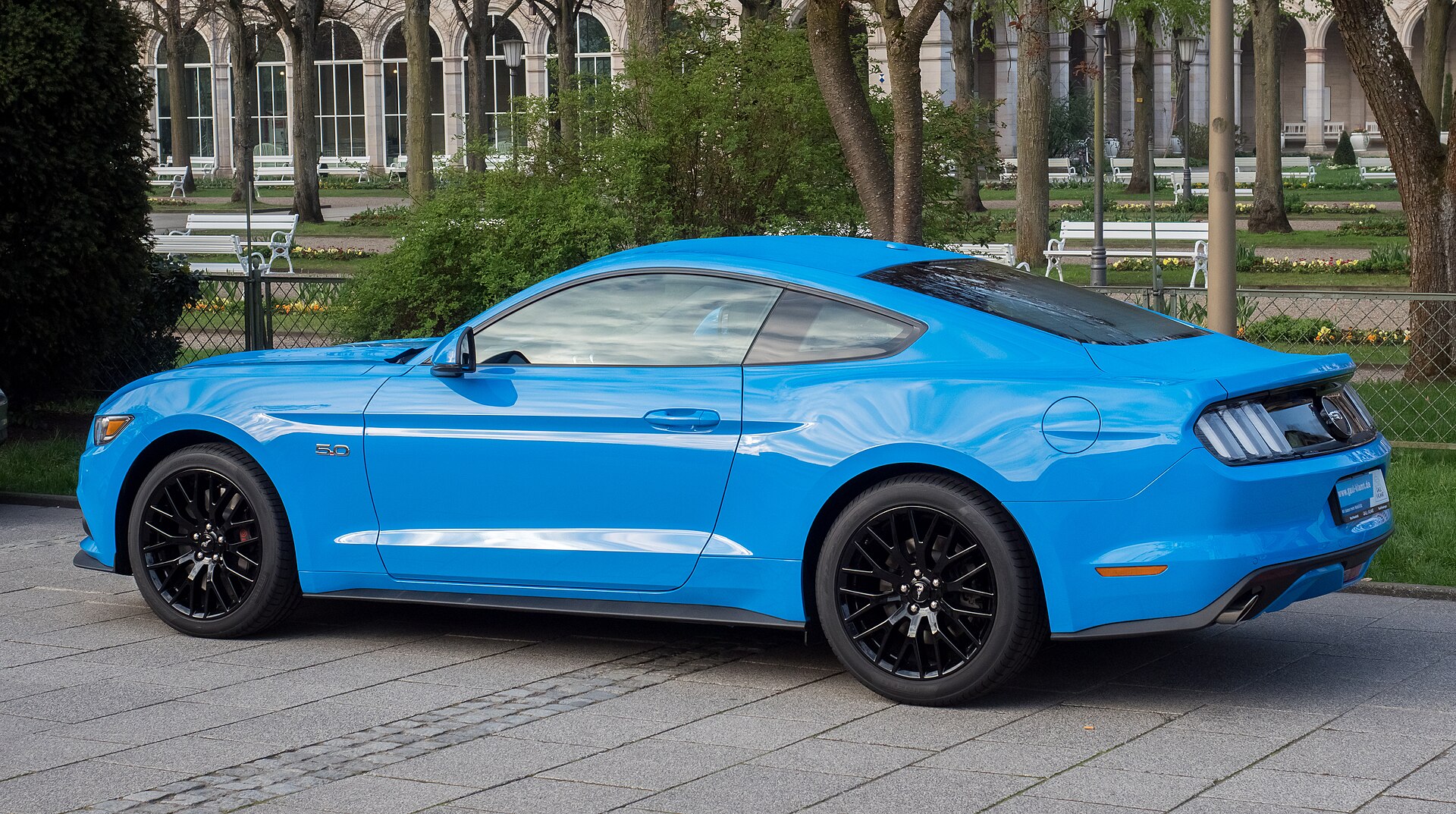
The GT badge is the whole point: it marks the 5.0-liter Coyote V8, a naturally aspirated engine that spins past 7,000 rpm and makes roughly 480 horsepower in current form. In a market awash with turbocharged four-cylinders, that free-breathing American soundtrack is exactly what Japanese buyers are chasing.
Japan's American-car scene is real and deep-pocketed, and left-hand drive is no obstacle — the country registers LHD imports without conversion. Because clean US-market GTs often sell for less stateside than comparable cars fetch in Japan, exporting a well-kept example can pencil out even after freight and the 10% consumption tax.
Ford's Mustang GT has carried a V8 in its nose since the nameplate's 1960s origins, but the modern chapter opened with the 2011 arrival of the 5.0-liter Coyote and sharpened with the 2015 S550, which finally paired that engine with independent rear suspension. The current S650 keeps the formula honest: naturally aspirated, rear-drive, manual still on the menu. For enthusiasts raised on the pony-car myth, it remains the most attainable proper American V8.
US-market GTs are plentiful, which keeps values sane and lets exporters be picky. Prioritize unmodified, accident-free cars with clean history reports and a clear title, since Japanese inspectors and buyers both reward originality. Watch for the usual muscle-car abuse — clutch wear on manuals, curbed wheels, and signs of drag or track use. Coyote engines are robust, but confirm the service record and check for oil consumption on higher-mileage examples before committing.
Most cars leave the West Coast by RoRo from Long Beach toward Yokohama or Nagoya, a straightforward two-to-three-week crossing; container shipping costs more but shields fresh paint. The friction comes after landing: Japanese registration is paperwork-heavy, and a specialist import agent earns their fee navigating shaken, emissions documentation and the displacement-based road tax. Don't underestimate ownership costs either — a 5.0-liter, wide-body coupe lands in Japan's priciest annual tax brackets, year after year.
The full cost breakdown
Every line below is a researched 2026 estimate in USD. We start from the $45,000 purchase price, add marine insurance at about 1.5% and ocean freight, then 0% duty and 10% VAT/GST on the duty-inclusive (CIF) value, and the broker, compliance and registration fees. Change the purchase price and everything else scales only modestly.
| Vehicle (purchase price) | $45,000 |
| Seller-side export documentation | $150 |
| Ocean freight | $2,800 |
| Marine insurance (~1.5%) | $675 |
| Japan applies 0% duty on passenger cars | $0 |
| Japanese consumption tax is 10% | $4,848 |
| Customs broker & port handling | $830 |
| Type-approval / inspection | $2,500 |
| Inland transport & registration | $1,500 |
| Estimated all-in landed cost | $58,303 |
On this Ford Mustang GT, destination taxes are the real story: roughly $0 in import duty plus $4,848 in import VAT/GST — about $4,848 together, frequently more than the $2,800 of ocean freight and every handling fee combined. All in, budget around $13,303 on top of the $45,000 purchase price (about 30%) before the car is registered in Japan.
Step by step: how exporting this car works
- Agree the purchase and secure the title/export paperwork in USA.
- Book ocean freight — roll-on/roll-off (RoRo) is cheapest, a sole-use container is safest for a high-value car.
- Clear Japanese customs — passenger cars carry 0% duty, but 10% consumption tax applies.
- Pass the strict shaken roadworthiness inspection, which is the real hurdle on the Japan side.
- Register the vehicle locally once shaken is passed.
Compliance & the fine print
Japan levies no import duty on passenger cars, so a Mustang lands tariff-free, but a 10% consumption tax applies to the customs value plus freight and insurance. Before it can wear plates, the car must pass shaken, the periodic inspection that checks brakes, emissions, exterior dimensions and headlight aim — the last a frequent snag, since US headlamps dip toward the wrong side for left-hand traffic. Displacement matters too: a 5.0-liter engine sits in a high annual automobile-tax bracket, and the Mustang's width pushes it into the larger "3-number" vehicle class.
Frequently asked questions
Does a US Mustang need converting to right-hand drive for Japan?+
No. Japan registers left-hand-drive vehicles as-is; conversion is neither required nor common, and the LHD layout is part of the appeal for buyers who want a genuinely American car.
Will a modern 5.0 Mustang pass Japanese emissions and shaken?+
Recent Coyote GTs generally meet the standards, but plan on headlight-aim adjustment and possibly a re-aimed beam pattern. Budget time for inspection at the Land Transport Office, and keep the original US title and export paperwork in order.
What is the total estimated cost to export a Ford Mustang GT?+
About $58,303 all-in for a $45,000 example — the purchase price plus roughly $13,303 in freight, insurance, duty, VAT/GST, compliance and registration. Your figure shifts with the exact price, route and exchange rate.
Read next
Exporting a Ford Mustang from the US to Europe: what it costs
Exporting a Chevrolet Camaro from the US to Germany