Ford F-150 Raptor Export USA to Germany: 2026 Cost & Rules
Shipping a Ford F-150 Raptor to Germany is less about the ocean crossing and more about convincing customs and TÜV that a Baja-bred pickup belongs on German plates.

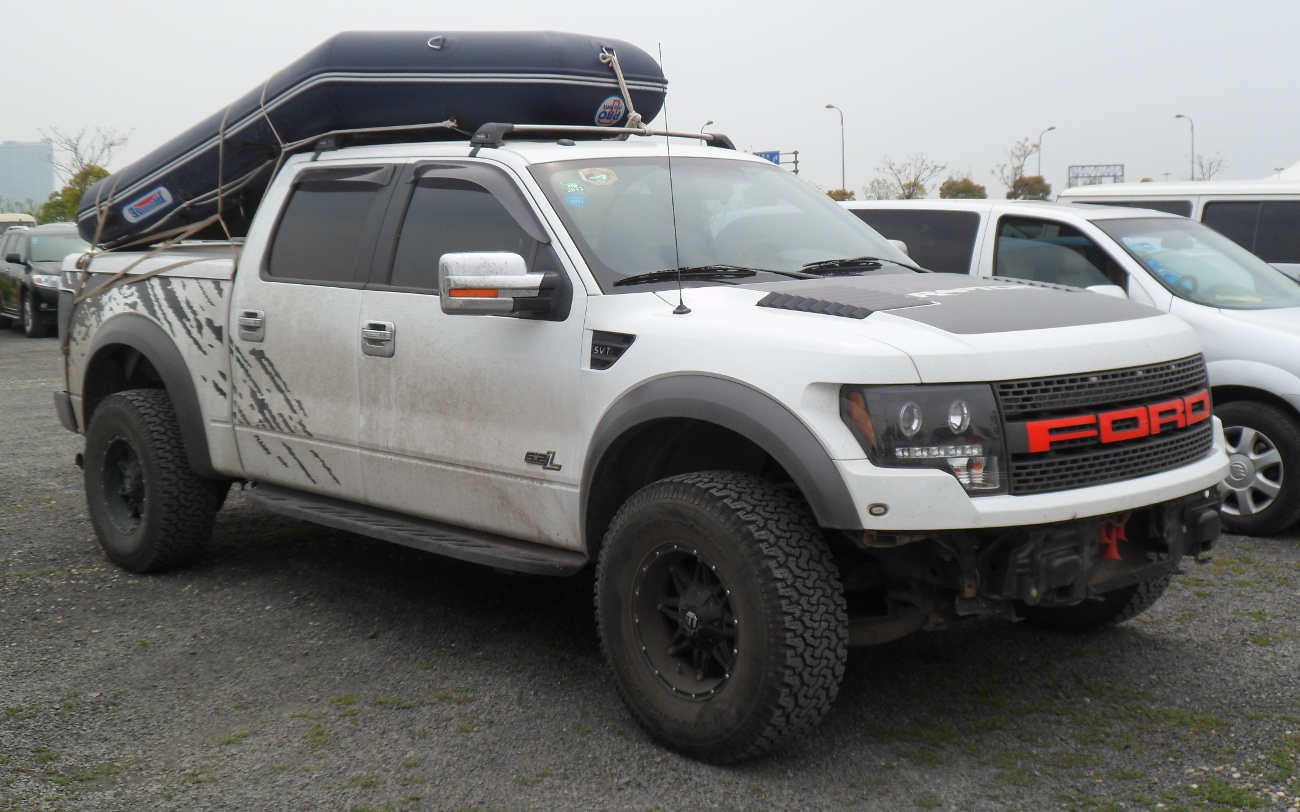
A US-market Raptor lands in Germany as an exotic precisely because Ford never sold it there. Its desert-truck hardware, long-travel suspension, wide track, and a torque-rich twin-turbo V6 or supercharged V8, has no European equivalent, which is exactly why enthusiasts pay to ship one across the Atlantic.
The catch is that Germany sees the Raptor as a light commercial truck, not a car. That single classification decision triggers the 22-percent tariff, shapes vehicle-tax and insurance treatment, and turns registration into the hardest part of the whole exercise.
The Raptor began in 2010 as Ford's SVT desert-racing halo truck, packing a 6.2-liter V8 and long-travel Fox shocks built to survive Baja whoops at speed. The 2017 second generation switched to a 450-horsepower 3.5-liter twin-turbo EcoBoost V6, and the 2021 third generation added a five-link coil rear and available 37-inch tires. The 2023 Raptor R crowned the range with a supercharged 5.2-liter V8. Nothing sold in Europe replicates its width, wheel travel, or sheer road presence.
Values swing hard by generation and specification. Clean first-generation V8 trucks are turning collectible, EcoBoost examples trade on mileage and documented service, and the Raptor R commands a steep premium. Inspect early 3.5-liter units for cam-phaser rattle and neglected cooling, and treat any Raptor as a machine that may have been genuinely thrashed off-road. Verify a clean title, check carefully for salvage or flood branding, and confirm the suspension, skid plates, and driveline have not been quietly abused.
Most Raptors travel RoRo or in a container from a US port to Bremerhaven or Hamburg, but the real work starts at the dock. German customs classify the pickup under heading 8704, triggering the 22-percent commercial-vehicle duty rather than the 10-percent car rate, plus 19-percent import VAT. Then comes individual approval at TÜV or DEKRA, where emissions proof, EU-legal lighting, and a rear fog lamp are non-negotiable. Budget time for the Umweltplakette, and remember the Raptor's width makes German parking a daily negotiation.
The full cost breakdown
Every line below is a researched 2026 estimate in USD. We start from the $75,000 purchase price, add marine insurance at about 1.5% and ocean freight, then 22% duty and 19% VAT/GST on the duty-inclusive (CIF) value, and the broker, compliance and registration fees. Change the purchase price and everything else scales only modestly.
| Vehicle (purchase price) | $75,000 |
| Seller-side export documentation | $150 |
| Ocean freight | $2,000 |
| Marine insurance (~1.5%) | $1,125 |
| EU duty on light trucks is 22%, far higher than the 10% car rate | $17,188 |
| 19% German import VAT on the duty-inclusive value | $18,109 |
| Customs broker & port handling | $830 |
| Type-approval / inspection | $2,500 |
| Inland transport & registration | $1,500 |
| Estimated all-in landed cost | $118,402 |
On this Ford F-150 Raptor, destination taxes are the real story: roughly $17,188 in import duty plus $18,109 in import VAT/GST — about $35,297 together, frequently more than the $2,000 of ocean freight and every handling fee combined. All in, budget around $43,402 on top of the $75,000 purchase price (about 58%) before the car is registered in Germany.
Step by step: how exporting this car works
- Agree the purchase and secure the title/export paperwork in USA.
- Book ocean freight — roll-on/roll-off (RoRo) is cheapest, a sole-use container is safest for a high-value car.
- Make the customs entry and pay 22% duty plus 19% import VAT on the duty-inclusive value.
- Obtain EU type-approval (a Certificate of Conformity) or pass individual approval such as the German TÜV, plus any registration tax.
- Register the vehicle in Germany and settle any CO2-based registration tax.
Compliance & the fine print
Because Ford never type-approved the Raptor for Europe, there is no EU Certificate of Conformity, so the truck must pass individual approval (Einzelabnahme under §21 StVZO) at TÜV or DEKRA before it can be registered. Customs classify the pickup under HS heading 8704, applying the EU's 22-percent light-commercial-vehicle duty instead of the 10-percent passenger-car rate, followed by 19-percent German import VAT. Expect to document emissions compliance and convert the lighting to EU standards, including a rear fog lamp, and to secure an environmental sticker (Umweltplakette) for access to city low-emission zones.
Frequently asked questions
Why does a Raptor face 22 percent duty when cars are only 10 percent?+
The EU classifies pickup trucks as light commercial vehicles under customs heading 8704, which carries a 22-percent tariff, while passenger cars fall under 8703 at 10 percent. Because the Raptor has an open cargo bed, German customs almost always treat it as a truck, so the higher rate applies before import VAT is calculated. Getting the classification argued correctly at the dock is where the money is won or lost.
Can I put a US Raptor on normal German plates?+
Yes, but only after individual approval at TÜV or DEKRA. Without an EU Certificate of Conformity you must prove emissions compliance, fit EU-legal lighting including a rear fog lamp, and often adjust the speedometer and side markers. Once it passes, you can register it, though whether it is titled as a Pkw or an Lkw changes your annual tax and insurance.
What is the total estimated cost to export a Ford F-150 Raptor?+
About $118,402 all-in for a $75,000 example — the purchase price plus roughly $43,402 in freight, insurance, duty, VAT/GST, compliance and registration. Your figure shifts with the exact price, route and exchange rate.
Read next
Exporting a Ford Mustang from the US to Europe: what it costs
Exporting a Chevrolet Camaro from the US to Germany