Alfa Romeo 155: Italy-to-USA Import Guide & 2026 Cost
The touring-car champion Alfa never sold in America is finally old enough to import legally, and it still drives like nothing else from its era.

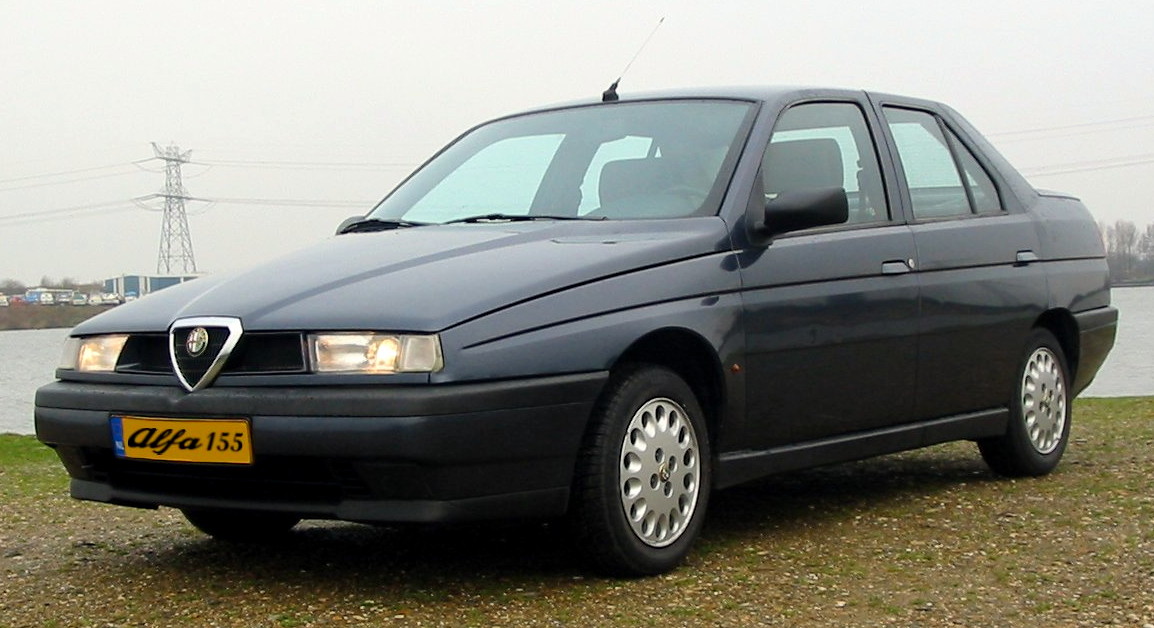
In period the 155 was Alfa Romeo's weapon of choice: Nicola Larini and the all-wheel-drive V6 TI dominated the 1993 DTM, while Gabriele Tarquini took the 1994 British Touring Car title in a front-drive Twin Spark. Almost none of that pedigree reached American showrooms, because Alfa had already retreated from the US market by the time the car launched.
Road versions split between the free-revving 2.0 Twin Spark and the scarce Q4, which borrowed the Lancia Delta Integrale's turbocharged 16-valve four and its all-wheel-drive system. Every one left Milan in left-hand drive, so unlike a JDM import there is no wheel-swap headache waiting when the container is opened.
When it arrived in 1992 the 155 traded the rear-drive 75's raw charm for a Fiat Tipo-derived front-drive platform and crisp I.DE.A Institute wedge styling, a switch purists grumbled about then and forgive now. Enthusiasts chase the 2.0 Twin Spark for its eager, hard-edged four and the Q4 for its Integrale-sourced turbo drivetrain. The 1995 wide-body revision widened the track and answered most early handling criticism. As Delta Integrale values soar, the 155 looks increasingly underrated.
Twin Spark cars remain among the most affordable 1990s Alfas, while the Q4 and 2.5 V6 versions command real premiums and rarely surface for sale. Rust is the first thing to inspect: check the sills, rear arches, floors and subframe mounts, since Italian steel of the era corrodes freely. On Twin Sparks listen for a rattling cam phase variator and confirm cambelt history; the Q4's all-wheel-drive hardware is durable but expensive to repair. Documented service and honest bodywork matter far more than a low odometer reading.
Most cars leave Italy through classified sites like Subito and AutoScout24, so a local pre-purchase inspection is worth every euro given how deceptively tidy a rusty Alfa can photograph. Export typically runs through Genoa or Livorno by container or RoRo, and you will want the original libretto and a clean bill of sale before anything ships. On the US side a customs broker files the DOT and EPA age-exemption forms and clears the 2.5% passenger-car duty. The usual traps are hidden corrosion, mismatched VINs, and scarce Q4-specific parts.
The full cost breakdown
Every line below is a researched 2026 estimate in USD. We start from the $20,000 purchase price, add marine insurance at about 1.5% and ocean freight, then 2.5% US duty on the declared value, and the broker, compliance and registration fees. Change the purchase price and everything else scales only modestly.
| Vehicle (purchase price) | $20,000 |
| Export agent & auction fees | $1,200 |
| Ocean freight | $2,600 |
| Marine insurance (~1.5%) | $300 |
| The standard US passenger-car import duty is 2.5% of declared value | $500 |
| Customs broker & port handling | $830 |
| EPA / DOT entry & compliance paperwork | $300 |
| Inland transport & registration | $1,500 |
| Estimated all-in landed cost | $27,230 |
Into USA the duty is light, just $500, so tax is the small part of the bill. It is shipping (about $2,600), compliance and registration that make up most of the roughly $7,230 you add on top of the $20,000 purchase price — around 36% before you turn a wheel.
Step by step: how importing this car works
- Agree the purchase and secure the title/export paperwork in Italy (an export agent or auction house usually handles de-registration).
- Book ocean freight — roll-on/roll-off (RoRo) is cheapest, a sole-use container is safest for a high-value car.
- Confirm eligibility from the build month — the US 25-year DOT exemption is calculated month by month, not by model year.
- Clear US customs and pay the 2.5% duty, then file EPA Form 3520-1 and DOT Form HS-7 at entry.
- Arrange inland transport, then title and register in your state — a few states add emissions or kei-vehicle checks.
Compliance & the fine print
Because the 155 was built from 1992 to 1997, the entire range has now passed the US 25-year threshold, exempting it from the FMVSS crash and equipment standards that NHTSA enforces. Engines left in original configuration also clear the EPA's 21-year exemption for vehicles of that age. In practice a broker files DOT form HS-7 and EPA form 3520-1 claiming those age exemptions, and the car enters as a collector import rather than facing costly federalization.
Frequently asked questions
Is the Alfa Romeo 155 legal to import to the US in 2026?+
Yes. The whole 1992-1997 range is now more than 25 years old, so it is exempt from FMVSS federalization and qualifies for the EPA age exemption. It also left the factory in left-hand drive, so no conversion is needed.
Should I import a Twin Spark or a Q4?+
The 2.0 Twin Spark is cheaper, easier to source, and simpler to maintain, making it the sensible first Alfa. The Q4 offers Integrale turbo mechanicals and all-wheel drive but is rare, pricier, and harder to find parts for, so buy one only with strong service history.
What is the total estimated cost to import a Alfa Romeo 155?+
About $27,230 all-in for a $20,000 example — the purchase price plus roughly $7,230 in freight, insurance, duty, compliance and registration. Your figure shifts with the exact price, route and exchange rate.
Read next
Importing a Nissan Skyline R34 to the USA: the true 2026 cost
Importing a Toyota Supra MK4 (A80) to the USA in 2026