Importing a Ducati 916 to the USA: 2026 Costs and Rules
The Ducati 916 is the 1990s poster bike that grew up into a blue-chip collectible, and for once the rules of importing one into the US actually work in your favor.

At 916cc, the Desmoquattro sits comfortably above the 800cc mark, and that matters at the border: US customs classifies motorcycles over 800cc at a free duty rate, so no tariff attaches to the bike itself. A smaller Ducati, like a Monster 600, would land in the dutiable band instead.
This is a poster bike finally coming of age. A mid-1990s 916 now clears both the DOT 25-year and EPA 21-year thresholds, so the machine that hung on bedroom walls can be legally titled and ridden on American roads rather than parked as a show piece.
The 916 arrived in 1994 as Massimo Tamburini's masterwork, drawn at Cagiva's research center to define Ducati's shape for a decade. Its 916cc liquid-cooled Desmoquattro L-twin, single-sided swingarm, underseat pipes and stacked twin headlights turned a Superbike homologation machine into a genuine design object. Carl Fogarty made it a World Superbike legend, and the 996 and 998 that followed were evolutions of the same silhouette. Few 1990s motorcycles are so completely iconic.
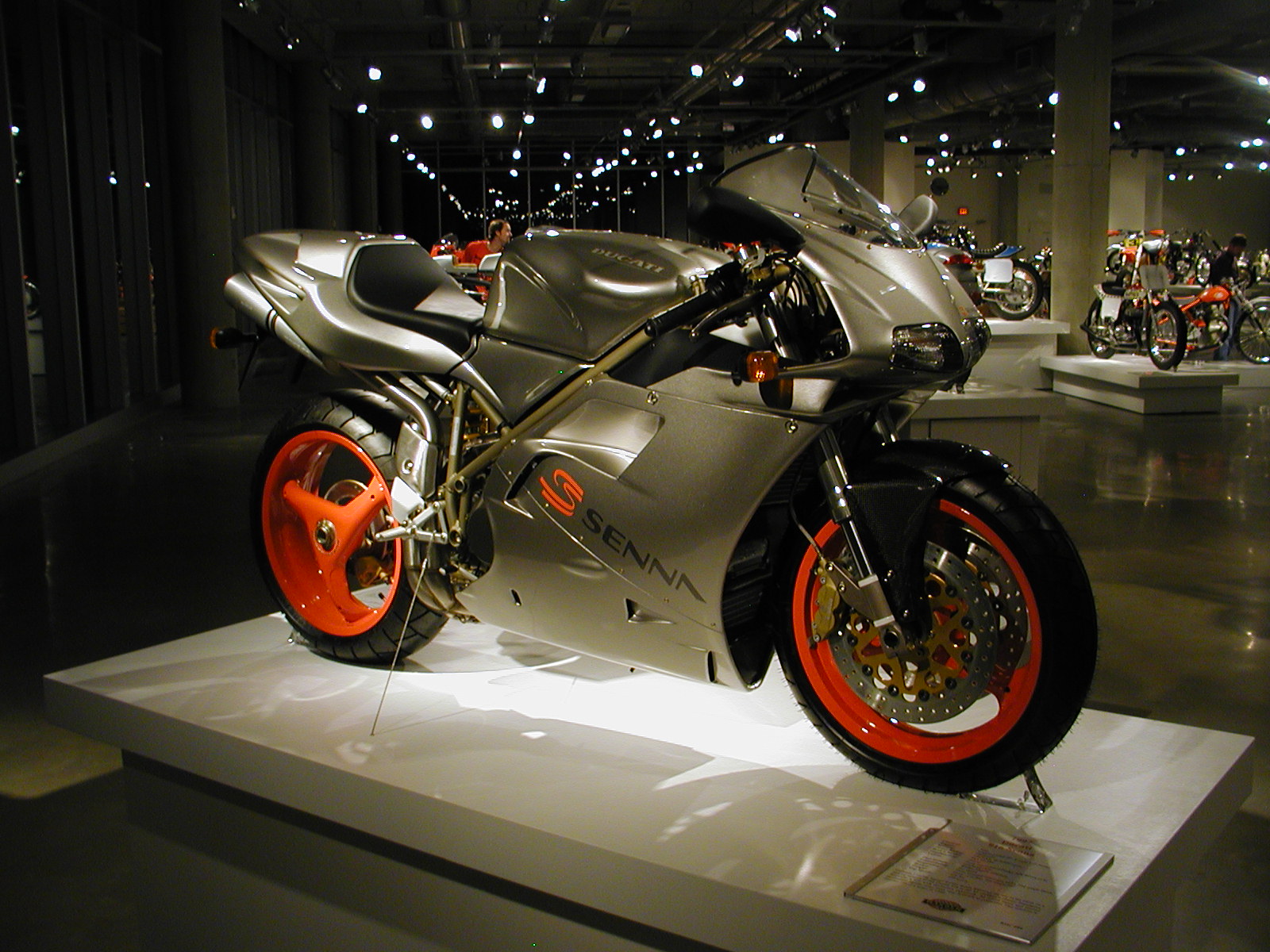
Values have climbed steadily as the 916 matured from used sportbike to collectible. A clean Biposto or Strada sits well below the rarefied SP, SPS and Senna editions, which command serious premiums for their numbers and provenance. Buy on history, not cosmetics: confirm the cam-belt service, since the belts must be replaced on a strict calendar schedule regardless of mileage, check valve-clearance records, and inspect the fragile, expensive original bodywork. Look for corrosion on the trellis frame and crash repairs around the fairing tabs.
Most 916s cross the Atlantic crated inside a shared container out of Genoa or Livorno, then clear customs at a US port. Budget for ocean freight, marine insurance, the customs broker and destination charges rather than duty. The usual snags are paperwork: a missing Italian libretto, an export deregistration that never happened, or an EPA form completed incorrectly. Line up your broker and the seller's full document set before the bike ships, not after it has already landed on the dock.
The full cost breakdown
Every line below is a researched 2026 estimate in USD. We start from the $22,000 purchase price, add marine insurance at about 1.5% and ocean freight, then 0% US duty on the declared value, and the broker, compliance and registration fees. Change the purchase price and everything else scales only modestly.
| Vehicle (purchase price) | $22,000 |
| Export agent & de-registration | $500 |
| Professional crating | $400 |
| Ocean freight (crated, LCL) | $1,600 |
| Marine insurance (~1.5%) | $330 |
| Motorcycles over 800cc enter the US duty-free | $0 |
| Customs broker & port handling | $410 |
| EPA / DOT entry & compliance paperwork | $150 |
| Inland transport & registration | $750 |
| Estimated all-in landed cost | $26,140 |
Into USA the duty is light — there is none at all on this one, so tax is the small part of the bill. It is shipping (about $1,600), compliance and registration that make up most of the roughly $4,140 you add on top of the $22,000 purchase price — around 19% before you turn a wheel.
Step by step: how importing this bike works
- Agree the purchase and secure the title/export paperwork in Italy (an export agent or auction house usually handles de-registration).
- Have the bike professionally crated and booked onto an LCL ocean sailing (or share a container to cut the per-unit cost).
- Confirm eligibility from the build month — the US 25-year DOT exemption is calculated month by month, not by model year.
- Clear US customs and pay the 0% duty (over-800cc motorcycles are duty-free), then file EPA Form 3520-1 and DOT Form HS-7 at entry.
- Arrange inland transport, then title and register in your state — a few states add emissions or kei-vehicle checks.
Compliance & the fine print
A 1990s Ducati 916 clears the two federal gates that stop most newer imports. NHTSA exempts motor vehicles 25 years or older from FMVSS conformance, and the EPA admits highway motorcycles at least 21 years old in original, unmodified configuration under its age exemption, so no emissions-lab work is required. You will still file the DOT HS-7 and EPA 3520-21 declarations at the port of entry. Classified over 800cc, the bike carries a free duty rate, though the Merchandise Processing and Harbor Maintenance fees still apply.
Frequently asked questions
Does the 916cc engine mean I owe import duty?+
No. US customs classifies motorcycles over 800cc at a free duty rate, and the 916 clears that line easily, so no tariff applies to the motorcycle itself. You will still owe the standard Merchandise Processing and Harbor Maintenance fees, plus freight, brokerage, and your state's title and registration costs.
Can I register and ride a 1990s 916 anywhere in the US?+
Federally, yes: a mid-90s 916 is old enough to be exempt from both DOT and EPA conformance, so it clears entry cleanly. Titling is handled state by state, and a few states scrutinize imported bikes and off-register history more closely, so confirm your DMV accepts the Italian documents and a bill of sale before you commit.
What is the total estimated cost to import a Ducati 916?+
About $26,140 all-in for a $22,000 example — the purchase price plus roughly $4,140 in freight, insurance, duty, compliance and registration. Your figure shifts with the exact price, route and exchange rate.
Read next
Importing a Nissan Skyline R34 to the USA: the true 2026 cost
Importing a Toyota Supra MK4 (A80) to the USA in 2026