Kawasaki Z1 900 Import: Japan to USA Cost in 2026
The 903cc, twin-cam Kawasaki Z1 set the Japanese superbike template in 1973 — and importing one from Japan is easier than most collectors expect.

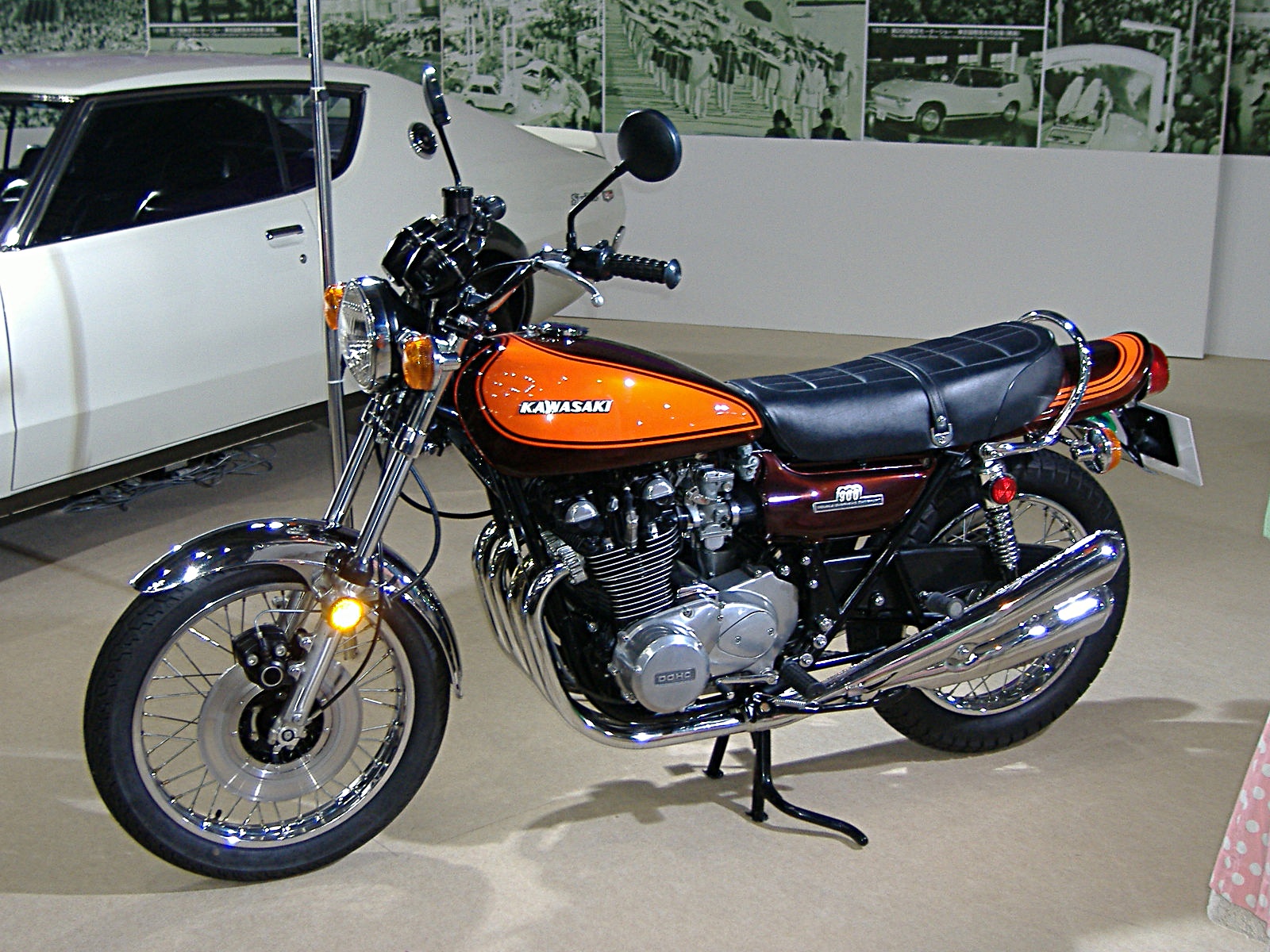
The Z1 900 is the bike that turned 'Japanese superbike' from a Honda idea into an arms race: 903cc, double overhead cams, and a top speed no rival could touch in 1973. Being over 800cc, it also happens to clear the US duty-free threshold for motorcycles, so the tariff line reads zero.
Age is firmly on your side. At more than fifty years old, a Z1 sails past both the 25-year DOT cutoff and the 21-year EPA cutoff, entering as a collector machine rather than one that must meet modern standards. The one catch is provenance: verify you are buying a genuine 903cc Z1, not its 750cc Japanese-market cousin.
Kawasaki began the Z1 as a 750, then went bigger after Honda's CB750 landed first. The result, launched for 1973, was a 903cc air-cooled inline-four with double overhead cams — twin-cam where Honda ran a single — good for around 82 horsepower and a genuine 130 mph. It out-ran everything, set endurance records at Daytona, and effectively wrote the template every Japanese superbike followed. That pedigree is why the first-year Z1 is so coveted today.
Values have climbed hard over the past decade, with clean, original 1973 first-year bikes commanding the strongest money and the later Z1A and Z1B trailing behind. Chase matching frame and engine numbers, unmolested cases, and honest paint rather than a fresh respray hiding filler. Many Z1s were drag-raced or cafe'd in period, so big-bore kits, welded frames, and reproduction bodywork are common. Correct candy color, seat pattern, and side-cover badges reward the patient buyer.
Here is the wrinkle: the 900 Z1 was never sold new in Japan, which capped domestic machines at 750cc — so its home-market twin is the near-identical 746cc Z2. Any 'Japanese' Z1 you buy is therefore a re-import, and you must confirm the engine is genuinely 903cc rather than a Z2 wearing 900 badges. Expect the bike crated and consolidated by sea, a Japanese export deregistration certificate that needs translation, and a state titling process that varies wildly once it lands.
The full cost breakdown
Every line below is a researched 2026 estimate in USD. We start from the $25,000 purchase price, add marine insurance at about 1.5% and ocean freight, then 0% US duty on the declared value, and the broker, compliance and registration fees. Change the purchase price and everything else scales only modestly.
| Vehicle (purchase price) | $25,000 |
| Export agent & de-registration | $500 |
| Professional crating | $400 |
| Ocean freight (crated, LCL) | $1,500 |
| Marine insurance (~1.5%) | $375 |
| Over-800cc motorcycles are duty-free in the US; classic age exemptions also apply | $0 |
| Customs broker & port handling | $410 |
| EPA / DOT entry & compliance paperwork | $150 |
| Inland transport & registration | $750 |
| Estimated all-in landed cost | $29,085 |
Into USA the duty is light — there is none at all on this one, so tax is the small part of the bill. It is shipping (about $1,500), compliance and registration that make up most of the roughly $4,085 you add on top of the $25,000 purchase price — around 16% before you turn a wheel.
Step by step: how importing this bike works
- Agree the purchase and secure the title/export paperwork in Japan (an export agent or auction house usually handles de-registration).
- Have the bike professionally crated and booked onto an LCL ocean sailing (or share a container to cut the per-unit cost).
- Confirm eligibility from the build month — the US 25-year DOT exemption is calculated month by month, not by model year.
- Clear US customs and pay the 0% duty (over-800cc motorcycles are duty-free), then file EPA Form 3520-1 and DOT Form HS-7 at entry.
- Arrange inland transport, then title and register in your state — a few states add emissions or kei-vehicle checks.
Compliance & the fine print
A 1973 to 1975 Z1 clears every US age threshold with room to spare. It qualifies for the NHTSA/DOT 25-year exemption from the Federal Motor Vehicle Safety Standards, claimed on form HS-7, and for the EPA exemption covering engines 21 or more years old in original configuration, declared on form 3520-1. Because its 903cc displacement exceeds 800cc, it falls under HTSUS heading 8711.50 and enters the United States free of federal import duty. You will still owe customs processing fees and any state sales or use tax at registration.
Frequently asked questions
Do I owe import duty on a Kawasaki Z1 brought into the US?+
No. The US tariff schedule (HTSUS 8711.50) places motorcycles with engines over 800cc at a free duty rate, and the Z1's 903cc clears that line comfortably. You will still pay customs processing fees, plus sales or use tax when you title it in your state, but the federal tariff itself is zero.
Is a Japanese-sourced Z1 actually a genuine 900?+
Not always, so check carefully. Kawasaki never sold the 903cc Z1 new in Japan, where a 750cc ceiling meant domestic buyers got the visually similar Z2. Confirm the engine number and displacement match a true Z1 before paying — a Z2 wearing Z1 clothing is a different, and usually cheaper, motorcycle.
What is the total estimated cost to import a Kawasaki Z1 900?+
About $29,085 all-in for a $25,000 example — the purchase price plus roughly $4,085 in freight, insurance, duty, compliance and registration. Your figure shifts with the exact price, route and exchange rate.
Read next
Importing a Nissan Skyline R34 to the USA: the true 2026 cost
Importing a Toyota Supra MK4 (A80) to the USA in 2026