Importing a Kawasaki Ninja ZX-9R from Japan: 2026 Cost Guide
The ZX-9R was Kawasaki's do-everything open-classer, quick enough to embarrass a Fireblade in a straight line yet civil enough to ride home afterward, and Japan is still the best place to find a clean one.

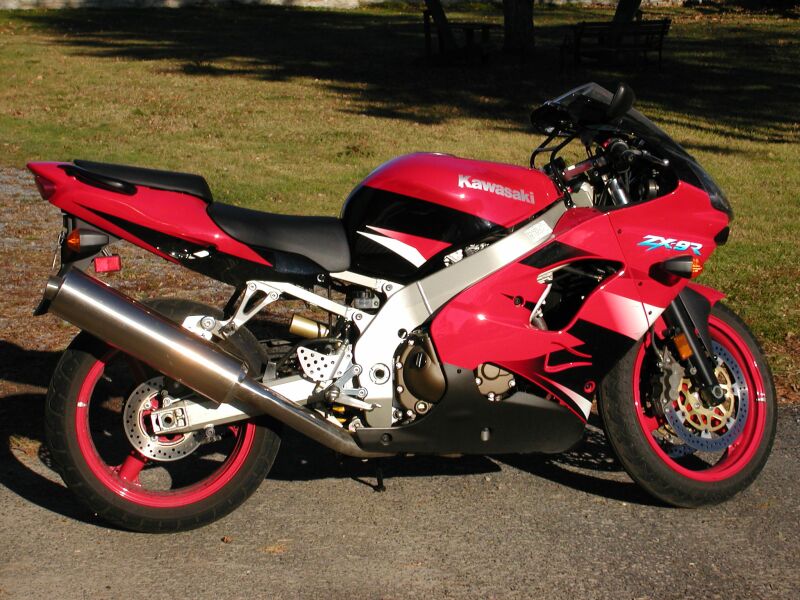
At 899cc, the ZX-9R sits well past the 800cc mark in the US tariff schedule, which is exactly where you want a motorcycle to land. Bikes over 800cc are classified under HTS 8711.50 at a free general duty rate, so displacement works in your favor here rather than against it.
A 1998-1999 C-model is now comfortably past the 25-year DOT threshold and the 21-year EPA cutoff, so it enters on age exemptions instead of costly federal conformity work. That single fact is the main reason enthusiasts keep sourcing these bikes out of Japan rather than closer to home.
Kawasaki pitched the ZX-9R as the sensible fast bike, an 899cc inline-four with genuine midrange aimed squarely at the Honda CBR900RR and, from 1998, the new Yamaha R1. The C-model was the turning point: lighter, sharper, and good for a real 140-odd horsepower, yet still happy to cover distance two-up. It never won the track-day arms race outright, and that is precisely its appeal now, a torquey, forgiving open-classer that asks far less of its rider than an R1 ever did.
Values stay reasonable next to period rivals, though clean, unmolested C and E examples have started creeping upward. Prioritize provenance over shine: inspect the charging system, since Kawasaki regulator/rectifiers of this vintage are a well-documented weak point, and look hard for crash repair, rashed fairing edges, and rounded-off fasteners. Carbureted bikes that have sat for years will need the carbs stripped, cleaned, and synced. A Japanese auction grade of 4 or better is a useful filter, but never a replacement for your own eyes on the bike.
In practice you buy through a Japanese exporter or auction agent, have the bike crated into a container out of Yokohama or Osaka, and clear US customs with the HS-7 and 3520-1 exemption forms, where a broker genuinely earns the fee. The usual snags are downstream rather than at the dock: a missing or untranslated export certificate stalls titling, some state DMVs demand a physical VIN inspection, and any machine stored for years wants fresh fluids, tires, and fork seals before it is road-ready. Budget time, not just money.
The full cost breakdown
Every line below is a researched 2026 estimate in USD. We start from the $8,000 purchase price, add marine insurance at about 1.5% and ocean freight, then 0% US duty on the declared value, and the broker, compliance and registration fees. Change the purchase price and everything else scales only modestly.
| Vehicle (purchase price) | $8,000 |
| Export agent & de-registration | $500 |
| Professional crating | $400 |
| Ocean freight (crated, LCL) | $1,400 |
| Marine insurance (~1.5%) | $120 |
| Over-800cc motorcycles are duty-free in the US | $0 |
| Customs broker & port handling | $410 |
| EPA / DOT entry & compliance paperwork | $150 |
| Inland transport & registration | $750 |
| Estimated all-in landed cost | $11,730 |
Into USA the duty is light — there is none at all on this one, so tax is the small part of the bill. It is shipping (about $1,400), compliance and registration that make up most of the roughly $3,730 you add on top of the $8,000 purchase price — around 47% before you turn a wheel.
Step by step: how importing this bike works
- Agree the purchase and secure the title/export paperwork in Japan (an export agent or auction house usually handles de-registration).
- Have the bike professionally crated and booked onto an LCL ocean sailing (or share a container to cut the per-unit cost).
- Confirm eligibility from the build month — the US 25-year DOT exemption is calculated month by month, not by model year.
- Clear US customs and pay the 0% duty (over-800cc motorcycles are duty-free), then file EPA Form 3520-1 and DOT Form HS-7 at entry.
- Arrange inland transport, then title and register in your state — a few states add emissions or kei-vehicle checks.
Compliance & the fine print
A late-1990s ZX-9R clears both federal aging exemptions: NHTSA waives FMVSS compliance for vehicles 25 or more years old, and the EPA exempts original-configuration engines at least 21 model years old, so a 1998-99 example needs neither a DOT bond nor emissions modification in 2026. You declare the DOT exemption on form HS-7 and the EPA exemption on form 3520-1 at the port of entry. Because the 899cc engine falls above 800cc under HTS 8711.50, the general import duty is free, meaning the paperwork rather than the tariff is the real work. Titling then happens at the state level, and a handful of states scrutinize imported motorcycles more closely than others.
Frequently asked questions
Is a Japan-market ZX-9R power-restricted?+
It can be. Machines built for Japan's domestic market were held to a voluntary 100 PS limit in this era, while export-spec bikes made roughly 140 PS. Many big sportbikes sold in Japan were actually full-power 'reverse-import' (gyaku-yunyu) units brought back specifically to dodge that cap, so confirm which version you are buying before you commit. The difference in output is substantial.
Do I have to deal with left- versus right-side conversion like a car import?+
No. A motorcycle has no steering side to swap, so the JDM-versus-US headache that complicates car imports simply doesn't exist here. Your real document concerns are the Japanese export certificate (the deregistration paper), a certified translation of it, and whatever VIN verification your state DMV insists on before it will issue a title.
What is the total estimated cost to import a Kawasaki Ninja ZX-9R?+
About $11,730 all-in for a $8,000 example — the purchase price plus roughly $3,730 in freight, insurance, duty, compliance and registration. Your figure shifts with the exact price, route and exchange rate.
Read next
Importing a Nissan Skyline R34 to the USA: the true 2026 cost
Importing a Toyota Supra MK4 (A80) to the USA in 2026