Import a Nissan Pao from Japan to the USA: 2026 Cost Guide
A retro Nissan that trades horsepower for charm, the Pao is arguably the easiest and most affordable JDM icon to bring in from Japan today.

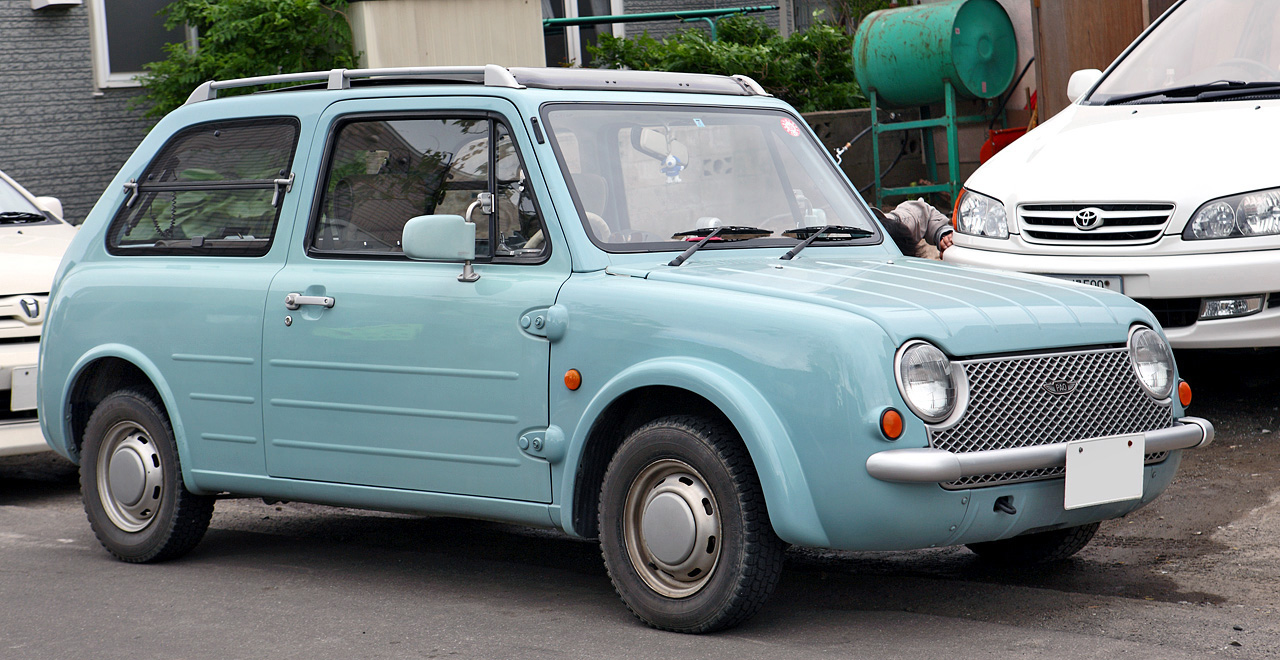
The Pao is the friendliest possible first import: a genuine JDM cult classic that is cheap to buy, cheap to run, and comfortably past the 25-year federal threshold. Its 987cc four makes barely 52 horsepower, so nobody buys one to go fast — they buy it to be charmed.
Every Pao is right-hand drive and was sold only in Japan, which is precisely why enthusiasts import them. There is no US-market equivalent and never was; the only way to own one is to bring it across the Pacific yourself.
The Pao arrived in January 1989 as the second of Nissan's Pike cars, following the Be-1 and preceding the Figaro. Built on the humble K10 March platform, it wore corrugated flanks, external door hinges, pop-out rear side windows and an optional roll-back canvas roof — a knowing nod to the Citroën 2CV and old Renault 4. Nissan built roughly 51,000 over a single reservation window, and every one was spoken for. Charm, not speed, was always the point.
Values have climbed as the Pike cars found a global audience, though the Pao remains the sensible-money entry next to the pricier, turbocharged Figaro. Because it shares its mechanicals with the March, parts for the 987cc MA10S engine are cheap and plentiful. Look hard at the sills, floors and the base of the windscreen for rust, check that the canvas top still seals, and favour a well-kept five-speed over a tired three-speed automatic. Documented service history from Japan is a genuine bonus.
Sourcing is the easy part: Japanese auctions and established exporters list Paos regularly, and most ship by RoRo or shared container from Yokohama or Kobe. The car is old enough that the federal paperwork is routine, but budget time for the customs broker, marine insurance and domestic transport once it lands. The classic pitfall is state registration — California in particular treats a 1989 direct import as smog-eligible, so confirm your own state's rules before you place a bid.
The full cost breakdown
Every line below is a researched 2026 estimate in USD. We start from the $11,000 purchase price, add marine insurance at about 1.5% and ocean freight, then 2.5% US duty on the declared value, and the broker, compliance and registration fees. Change the purchase price and everything else scales only modestly.
| Vehicle (purchase price) | $11,000 |
| Export agent & auction fees | $1,200 |
| Ocean freight | $2,500 |
| Marine insurance (~1.5%) | $165 |
| The standard US passenger-car import duty is 2.5% of declared value | $275 |
| Customs broker & port handling | $830 |
| EPA / DOT entry & compliance paperwork | $300 |
| Inland transport & registration | $1,500 |
| Estimated all-in landed cost | $17,770 |
Into USA the duty is light, just $275, so tax is the small part of the bill. It is shipping (about $2,500), compliance and registration that make up most of the roughly $6,770 you add on top of the $11,000 purchase price — around 62% before you turn a wheel.
Step by step: how importing this car works
- Agree the purchase and secure the title/export paperwork in Japan (an export agent or auction house usually handles de-registration).
- Book ocean freight — roll-on/roll-off (RoRo) is cheapest, a sole-use container is safest for a high-value car.
- Confirm eligibility from the build month — the US 25-year DOT exemption is calculated month by month, not by model year.
- Clear US customs and pay the 2.5% duty, then file EPA Form 3520-1 and DOT Form HS-7 at entry.
- Arrange inland transport, then title and register in your state — a few states add emissions or kei-vehicle checks.
Compliance & the fine print
Built in 1989 and 1990, every Nissan Pao now clears the US 25-year rule comfortably, which exempts it from the FMVSS safety standards that block newer imports. Because it is also more than 21 years old and in original configuration, it qualifies for the EPA's exemption, so no emissions modifications are required at the federal level. At the port you will file DOT form HS-7 (claiming the 25-year exemption) and EPA form 3520-1 (exemption code E) alongside your customs entry. Right-hand drive is legal to register in every state, though individual states set their own inspection and smog rules.
Frequently asked questions
Is the Nissan Pao hard to import as a first-timer?+
Not at all — it is one of the easiest cars to bring in. It is well past the 25-year mark, so there is no compliance work or DOT bond; a customs broker handles the entry paperwork, and you mostly just wait for the ship. Sourcing through a reputable Japanese exporter or auction agent removes most of the remaining risk.
How practical is a Pao to actually drive in the US?+
It is a city car, not a highway cruiser. With around 52 horsepower and a three- or five-speed gearbox it is happiest below 55 mph, but parts overlap with the Nissan March/Micra, so keeping one running is cheap and simple. Right-hand drive takes a little adjustment but is perfectly legal everywhere.
What is the total estimated cost to import a Nissan Pao?+
About $17,770 all-in for a $11,000 example — the purchase price plus roughly $6,770 in freight, insurance, duty, compliance and registration. Your figure shifts with the exact price, route and exchange rate.
Read next
Importing a Nissan Skyline R34 to the USA: the true 2026 cost
Importing a Toyota Supra MK4 (A80) to the USA in 2026