Subaru Sambar Import to USA: 2026 Cost & Duty Guide
The rear-engined kei truck that rides smoother than it has any right to — and the one JDM import where choosing a truck or a van swings your duty rate from 2.5% to 25%.

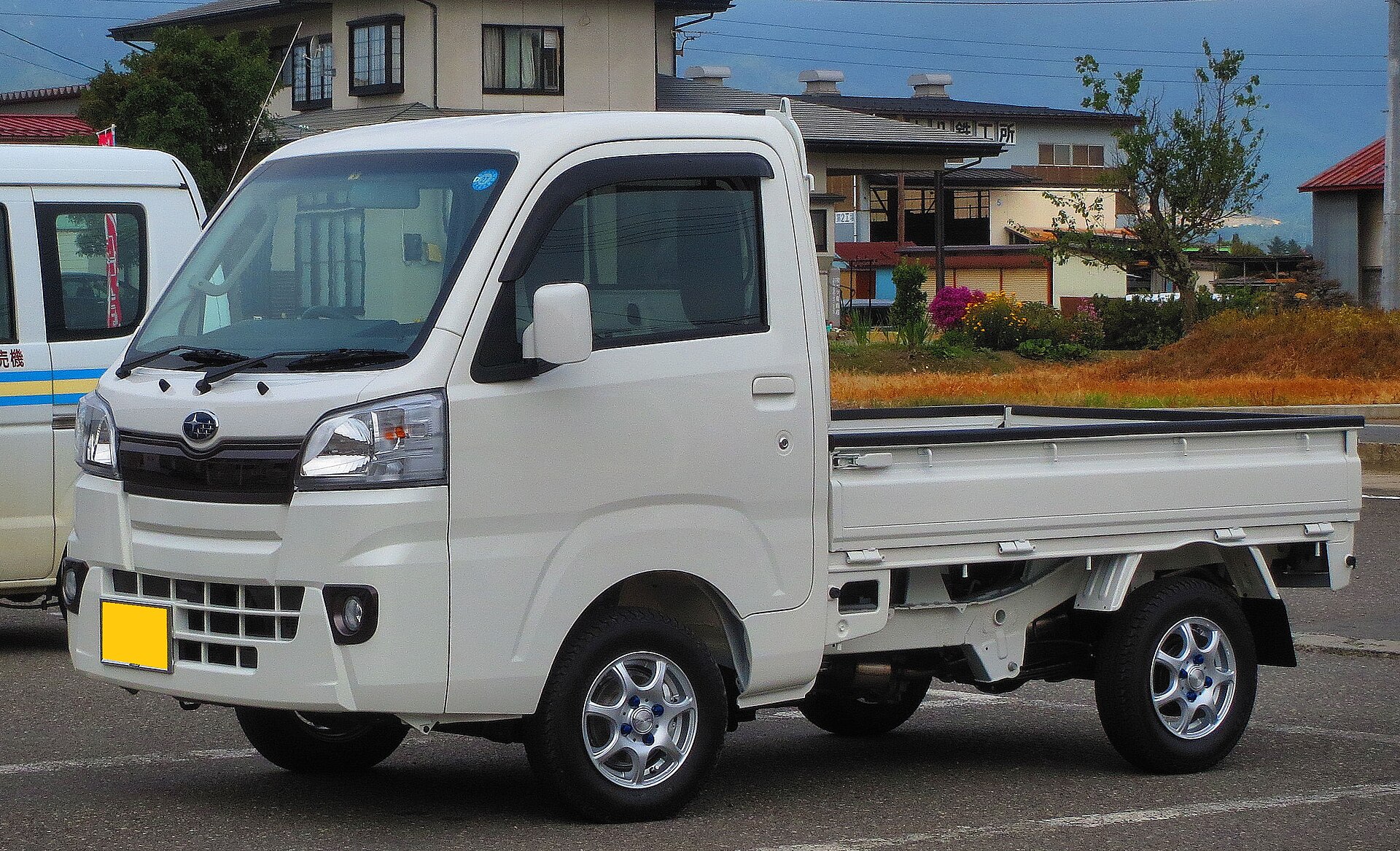
A Subaru Sambar costs about $15,085 all-in to import on the Japan → USA route in 2026 — a $7,000 purchase plus roughly $8,085 in shipping, 25% duty, compliance and registration.
- Route
- Japan → USA
- Est. all-in cost
- ~$15,085
- Duty & tax
- 25% duty
- On a purchase of
- $7,000
Subaru stubbornly kept the Sambar's engine hung out behind the rear axle long after rivals moved theirs under the seat, and it paid off: weight over the drive wheels, a genuinely flat load floor, and four-wheel independent suspension that soaks up ruts. Supercharged EN07 versions, low-range 4WD with a diff lock, and the retro chrome-faced Dias Classic van are the configurations enthusiasts chase.
The 25-year rule has opened the 5th- and early 6th-generation Sambars to US buyers just as the cult around them peaks. But this is the textbook case for the chicken-tax trap — a cargo truck and a passenger van that look nearly identical are dutiable ten times apart at the border.
Subaru launched the Sambar in 1961, borrowing the rear-engine layout of the 360 microcar when rivals buried their engines under the seat. That choice gave the truck weight over the driven rear wheels, a flat load bed, and — thanks to four-wheel independent suspension — a ride smoother than any kei rival. Enthusiasts prize the supercharged EN07 versions, selectable 4WD with a diff lock, and the chrome-grilled Dias Classic van. Subaru built its own Sambar through 2012, when it became a rebadged Daihatsu Hijet.
Japan's auction supply runs deep, and base Sambars are cheap at the block — but condition is the whole game. Most led hard agricultural lives, so a low odometer means little; inspect the bed, sills, and undercarriage for rust and dents, verify the rear-mounted cooling system, and check the EN07 timing belt plus supercharger health on boosted trucks. Confirm the 4WD actually engages. Dias Classic vans, supercharged models, and rust-free 4WD examples all command clear premiums.
Federally, the 25-year rule makes pre-2001 Sambars simple: they clear on EPA and DOT exemptions and ship cheaply by RoRo or shared container. Duty is where it bites. A cargo kei truck lands under the 25% chicken tax, while a passenger Dias van enters at just 2.5% — the single biggest cost lever on this import. The sharper trap is registration: several states restrict kei trucks from public roads, so confirm your DMV's stance before bidding. And temper expectations — these are back-road tools, not interstate cruisers.
How much does it cost to import a Subaru Sambar?
Every line below is a researched 2026 estimate in USD. We start from the $7,000 purchase price, add marine insurance at about 1.5% and ocean freight, then 25% US duty on the declared value, and the broker, compliance and registration fees. Change the purchase price and everything else scales only modestly.
| Vehicle (purchase price) | $7,000 |
| Export agent & auction fees | $1,200 |
| Ocean freight | $2,400 |
| Marine insurance (~1.5%) | $105 |
| Kei cargo trucks are light trucks, so US Customs applies the 25% "chicken tax" — the 25-year rule waives safety and emissions, not duty | $1,750 |
| Customs broker & port handling | $830 |
| EPA / DOT entry & compliance paperwork | $300 |
| Inland transport & registration | $1,500 |
| Estimated all-in landed cost | $15,085 |
Into USA the duty is light, just $1,750, so tax is the small part of the bill. It is shipping (about $2,400), compliance and registration that make up most of the roughly $8,085 you add on top of the $7,000 purchase price — around 116% before you turn a wheel.
How to import a Subaru Sambar, step by step
- Agree the purchase and secure the title/export paperwork in Japan (an export agent or auction house usually handles de-registration).
- Book ocean freight — roll-on/roll-off (RoRo) is cheapest, a sole-use container is safest for a high-value car.
- Confirm eligibility from the build month — the US 25-year DOT exemption is calculated month by month, not by model year.
- Clear US customs and pay the 25% duty, then file EPA Form 3520-1 and DOT Form HS-7 at entry.
- Arrange inland transport, then title and register in your state — a few states add emissions or kei-vehicle checks.
Is a Subaru Sambar legal to import? Rules & compliance
Any Subaru Sambar at least 25 years old imports free of FMVSS requirements under NHTSA's 25-year rule, declared on DOT form HS-7 (box 1); the engine clears EPA on form 3520-1 once it is 21-plus years old and unmodified. Classification then drives duty. A cargo-bed kei truck falls under HTS heading 8704 and takes the 25% "chicken tax" as a goods-transport vehicle, whereas a passenger-configured Dias van or wagon is dutiable at the standard 2.5% under 8703 for people-carrying vehicles.
Frequently asked questions
Is the Subaru Sambar legal to import to the USA?+
Yes, once it is 25 years old. At that age it is exempt from federal safety standards on DOT form HS-7, and the 21-year EPA engine exemption applies on form 3520-1, so no modifications are required. The remaining hurdle is state-level: some states restrict kei trucks from road registration, so confirm your DMV's stance before you buy.
How much duty do you pay on a Subaru Sambar?+
It depends entirely on body style. A cargo kei truck is hit with the 25% chicken tax as a goods vehicle, while a passenger Dias van or wagon is dutiable at 2.5%. Choosing a passenger-configured Sambar is the simplest way to land at the far lower duty rate.
What is the total estimated cost to import a Subaru Sambar?+
About $15,085 all-in for a $7,000 example — the purchase price plus roughly $8,085 in freight, insurance, duty, compliance and registration. Your figure shifts with the exact price, route and exchange rate.
Read next
Importing a Nissan Skyline R34 to the USA: the true 2026 cost
Importing a Toyota Supra MK4 (A80) to the USA in 2026