Importing a Toyota MR2 AW11 from Japan: 2026 Cost Guide
Toyota's featherweight first-generation mid-engine sports car is now fully import-legal, and a clean JDM AW11 is one of the easiest exotics-in-miniature to land stateside.

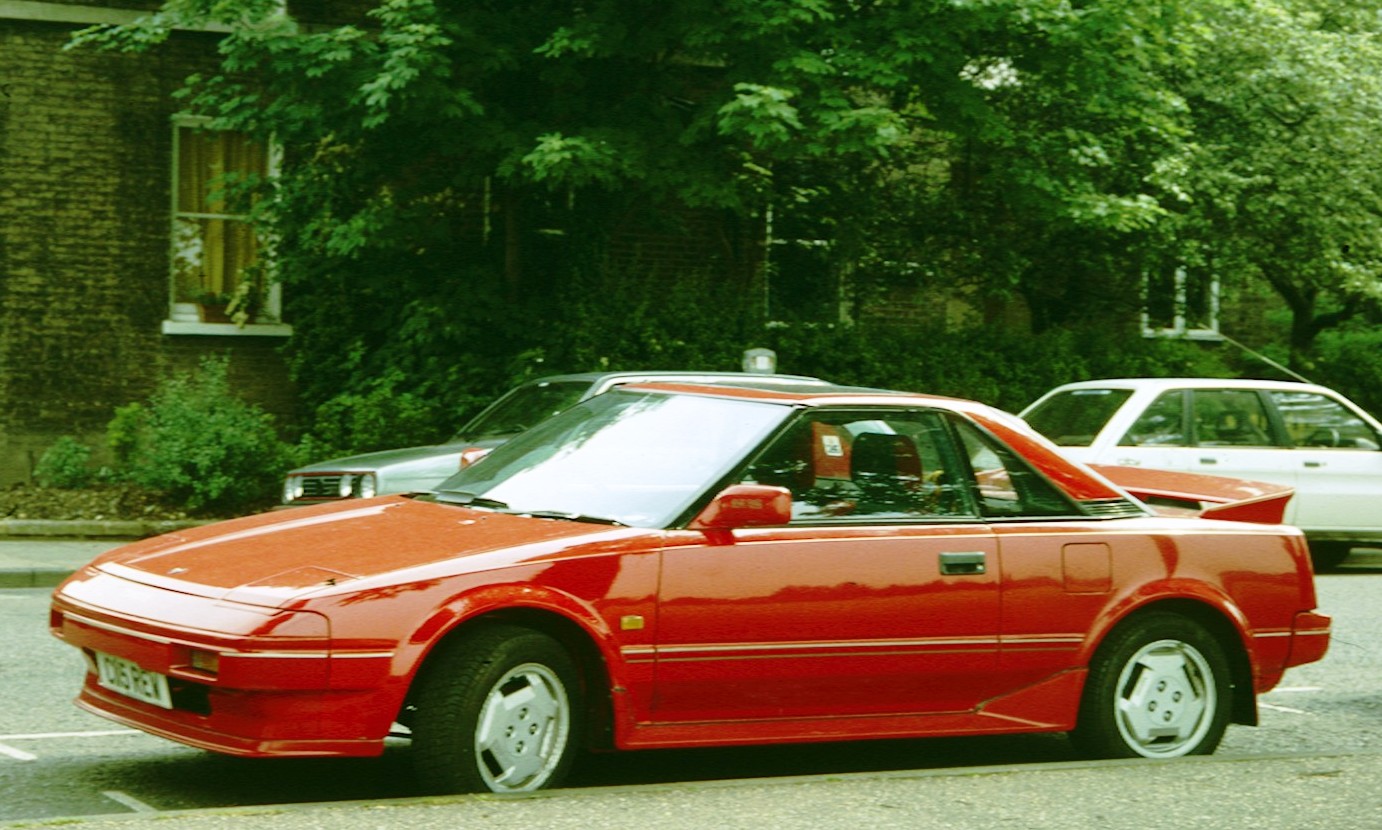
The AW11 was sold new in America, so importing one is a deliberate choice: JDM cars bring rust-free bodies, factory T-bar roofs and trims never federalized here, plus the earliest, cleanest 4A-GE examples.
It is also among the easiest classics to land. Every first-generation MR2 has aged past the 25-year threshold, turning what looks like an exotic mid-engine import into a weekend of paperwork and a container booking.
Toyota's first MR2 arrived in 1984 as the AW11, a mid-engine two-seater built around the Yamaha-developed 4A-GE, a 1.6-litre twin-cam that revved hard and rewarded being worked. Later cars gained the supercharged, intercooled 4A-GZE for extra shove. At barely 980 kilograms, with sharp, communicative steering and an optional T-bar roof, it delivered exotic-car layout on a sensible budget. It predates the heavier, curvier SW20 and remains, to many, the purest MR2.
Values have climbed steadily as honest examples thin out, with supercharged G-Limited cars and the early small-bumper models commanding the strongest money. Mileage matters less than integrity: check the rear chassis rails, jacking points and battery tray for corrosion, and confirm the 4A-GE runs cleanly with no timing-belt neglect. JDM cars often survive better than rust-belt US examples, but still inspect for hidden accident repair and amateur turbo or engine swaps that quietly erase originality and value.
Because every AW11 is now well past 25 years old, US import is refreshingly straightforward: the car clears NHTSA and EPA on age alone, needing only the HS-7 and 3520-1 forms at entry. The usual snags are paperwork, not engineering. Verify the export deregistration and matching chassis number, budget for shipping and stateside cleaning of undercarriage grime, and use a broker who actually knows JDM Toyotas. Right-hand drive is federally legal, though a few states add titling wrinkles worth checking first.
The full cost breakdown
Every line below is a researched 2026 estimate in USD. We start from the $14,000 purchase price, add marine insurance at about 1.5% and ocean freight, then 2.5% US duty on the declared value, and the broker, compliance and registration fees. Change the purchase price and everything else scales only modestly.
| Vehicle (purchase price) | $14,000 |
| Export agent & auction fees | $1,200 |
| Ocean freight | $2,600 |
| Marine insurance (~1.5%) | $210 |
| The standard US passenger-car import duty is 2.5% of declared value | $350 |
| Customs broker & port handling | $830 |
| EPA / DOT entry & compliance paperwork | $300 |
| Inland transport & registration | $1,500 |
| Estimated all-in landed cost | $20,990 |
Into USA the duty is light, just $350, so tax is the small part of the bill. It is shipping (about $2,600), compliance and registration that make up most of the roughly $6,990 you add on top of the $14,000 purchase price — around 50% before you turn a wheel.
Step by step: how importing this car works
- Agree the purchase and secure the title/export paperwork in Japan (an export agent or auction house usually handles de-registration).
- Book ocean freight — roll-on/roll-off (RoRo) is cheapest, a sole-use container is safest for a high-value car.
- Confirm eligibility from the build month — the US 25-year DOT exemption is calculated month by month, not by model year.
- Clear US customs and pay the 2.5% duty, then file EPA Form 3520-1 and DOT Form HS-7 at entry.
- Arrange inland transport, then title and register in your state — a few states add emissions or kei-vehicle checks.
Compliance & the fine print
Every AW11 (1984-1989) is now more than 25 years old, so it qualifies for the NHTSA FMVSS exemption and clears EPA under the 21-year rule, entering in original configuration without modification. At the port you file the DOT HS-7 (box 1) and EPA form 3520-1 (exemption code E), alongside the bill of lading, the Japanese export certificate and its translation. Passenger cars carry a 2.5% import duty. Right-hand drive is legal federally, though a handful of states add titling quirks.
Frequently asked questions
Do I really need to worry about US federal safety and emissions rules?+
No. Every first-generation MR2 is over 25 years old, so it enters exempt from FMVSS and, being past 21 years, from EPA emissions certification. You bring it in original condition and skip the crash and lab testing that would sink a newer car.
Why import a JDM MR2 when Toyota sold them here?+
Condition and specification. Japanese cars typically avoid the road-salt rust that kills US survivors, and offer trims, colours and factory options that never reached American showrooms. If you want an unmolested early car or a specific supercharged grade, Japan is the deepest pool.
What is the total estimated cost to import a Toyota MR2 AW11?+
About $20,990 all-in for a $14,000 example — the purchase price plus roughly $6,990 in freight, insurance, duty, compliance and registration. Your figure shifts with the exact price, route and exchange rate.
Read next
Importing a Nissan Skyline R34 to the USA: the true 2026 cost
Importing a Toyota Supra MK4 (A80) to the USA in 2026