Importing a Toyota Starlet GT Turbo to the USA: 2026 Costs
The featherweight 4E-FTE hot hatch Toyota kept exclusively for Japan is finally legal to bring stateside.

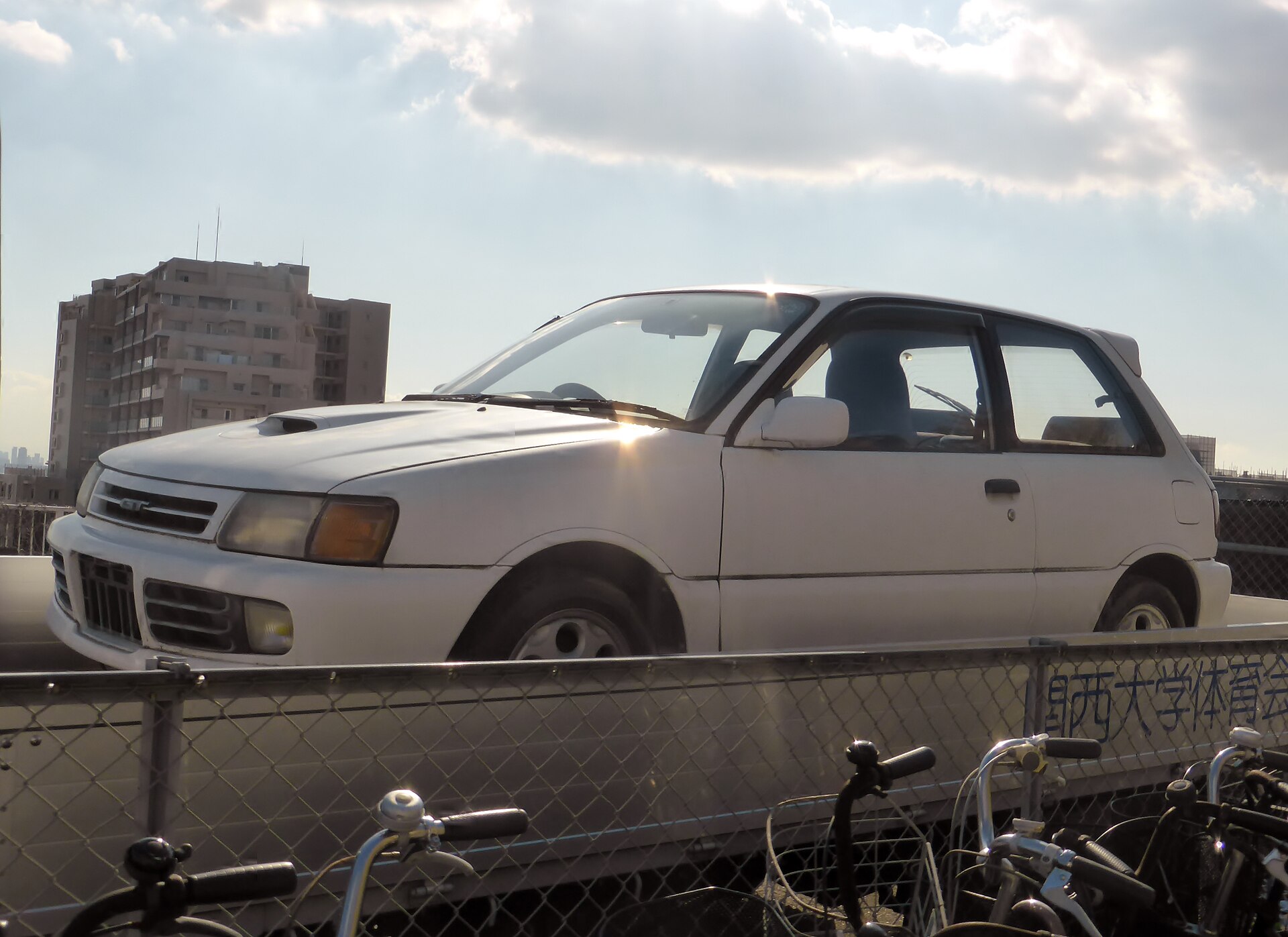
The Starlet GT Turbo was Japan's giant-killing supermini: around 135 PS squeezed from just 1.3 litres, wrapped in a body lighter than most modern city cars. Toyota never federalized it for America, so every example on US roads arrived under the 25-year rule.
Its appeal is simple. The 4E-FTE is one of Toyota's most boost-friendly small engines, the tuning parts are cheap and plentiful, and few cars offer this much fun for the outlay once landed.
Toyota built the EP82 Starlet GT Turbo from 1989 to 1996 and never sent it beyond Japan's borders. Under its stubby bonnet sits the 4E-FTE, a 1.3-litre twin-cam four fed by a CT9 turbo and air-to-air intercooler, spinning out roughly 135 PS. Bolt that to a shell that barely tips 800 kilograms and the result punches far above its displacement. Enthusiasts prize it for the eager, high-revving character that front-drive hot hatches rarely deliver anymore.
Values sat flat for years, which is precisely why so few survived intact. Cheap, light and easy to boost, most EP82s were thrashed, over-tuned or crashed long ago, so a rust-free, lightly modified car now commands real money. Study the auction sheet before you bid: check the grade, look hard for rot in the rear arches and floors, and treat any example running well above stock boost with suspicion. A tired 4E-FTE, cooked by years of abuse, is a common and costly surprise.
Buying through a Japanese auction agent is the usual route, and the mechanics are straightforward once you understand them. You will need the export certificate, an accurate odometer reading, and a customs broker to file your EPA and DOT paperwork at the US port. Watch for RoRo transit damage, deregistration delays, and the occasional DMV clerk who has never titled a right-hand-drive JDM car. California buyers face the steepest hurdles; most other states register these without drama.
The full cost breakdown
Every line below is a researched 2026 estimate in USD. We start from the $12,000 purchase price, add marine insurance at about 1.5% and ocean freight, then 2.5% US duty on the declared value, and the broker, compliance and registration fees. Change the purchase price and everything else scales only modestly.
| Vehicle (purchase price) | $12,000 |
| Export agent & auction fees | $1,200 |
| Ocean freight | $2,600 |
| Marine insurance (~1.5%) | $180 |
| The standard US passenger-car import duty is 2.5% of declared value | $300 |
| Customs broker & port handling | $830 |
| EPA / DOT entry & compliance paperwork | $300 |
| Inland transport & registration | $1,500 |
| Estimated all-in landed cost | $18,910 |
Into USA the duty is light, just $300, so tax is the small part of the bill. It is shipping (about $2,600), compliance and registration that make up most of the roughly $6,910 you add on top of the $12,000 purchase price — around 58% before you turn a wheel.
Step by step: how importing this car works
- Agree the purchase and secure the title/export paperwork in Japan (an export agent or auction house usually handles de-registration).
- Book ocean freight — roll-on/roll-off (RoRo) is cheapest, a sole-use container is safest for a high-value car.
- Confirm eligibility from the build month — the US 25-year DOT exemption is calculated month by month, not by model year.
- Clear US customs and pay the 2.5% duty, then file EPA Form 3520-1 and DOT Form HS-7 at entry.
- Arrange inland transport, then title and register in your state — a few states add emissions or kei-vehicle checks.
Compliance & the fine print
Every EP82 Starlet GT Turbo, built between 1989 and 1996, now clears the US 25-year rule, which exempts a vehicle from FMVSS safety standards once it reaches 25 years from its month of manufacture. Because the car is also well past the EPA's 21-year threshold, it qualifies for the original-configuration emissions exemption, so you file DOT Form HS-7 and EPA Form 3520-1 rather than paying for costly conversions. Passenger cars carry the standard 2.5% federal import duty. A federal pass does not override state law, however: California's referee process remains the toughest gate for any JDM import.
Frequently asked questions
Is the Starlet GT Turbo legal to import to the USA in 2026?+
Yes. The EP82 ran from 1989 to 1996, so every example has passed the 25-year mark and is eligible for the FMVSS exemption. It also clears the EPA's 21-year rule, meaning no emissions conversion is required as long as the car remains in its original configuration.
Can I register a right-hand-drive Starlet in my state?+
In most states, yes. RHD is federally legal, and the majority of DMVs will title an imported JDM car with the export certificate and a bill of sale. California is the notable exception, where CARB and the referee program make direct imports far harder, so confirm your state's process before you buy.
What is the total estimated cost to import a Toyota Starlet GT Turbo (EP82)?+
About $18,910 all-in for a $12,000 example — the purchase price plus roughly $6,910 in freight, insurance, duty, compliance and registration. Your figure shifts with the exact price, route and exchange rate.
Read next
Importing a Nissan Skyline R34 to the USA: the true 2026 cost
Importing a Toyota Supra MK4 (A80) to the USA in 2026