VW Type 2 Microbus Import to USA: 2026 Cost & Duty Guide
The air-cooled VW Microbus is the most recognizable van on earth, and a clean German-market bus is now far easier to import legally than it is to find one without rust.

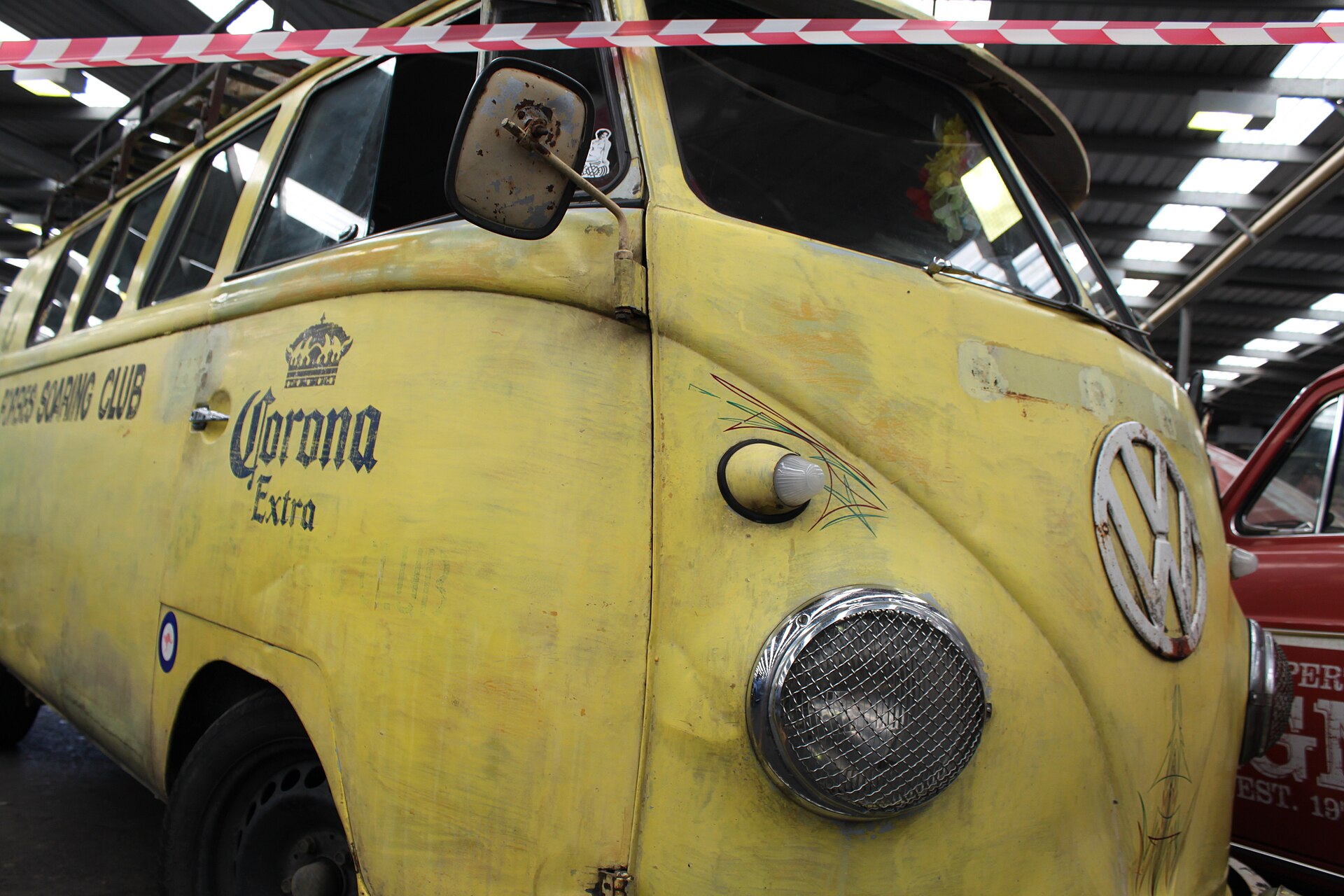
A Volkswagen Type 2 Microbus costs about $48,130 all-in to import on the Germany → USA route in 2026 — a $40,000 purchase plus roughly $8,130 in shipping, 2.5% duty, compliance and registration.
- Route
- Germany → USA
- Est. all-in cost
- ~$48,130
- Duty & tax
- 2.5% duty
- On a purchase of
- $40,000
Every Type 2 shares a rear-mounted, air-cooled flat-four and that upright walk-through cab, but values split hard by roofline: a 21- or 23-window Samba Deluxe, with its wraparound skylight glass and folding canvas roof, lives in a different price universe than a plain 11-window. Buyers reach into Germany because the bus was born in Wolfsburg in 1950, and the home market still holds the deepest bench of correct parts, marque specialists, and factory-documented restorations.
Here is the irony collectors love: the Type 2 cargo van was the literal target of the 1963 'chicken tax,' the 25% tariff Lyndon Johnson slapped on European light trucks to punish Bonn's duties on American poultry. That 25% rate still bites a windowless panel Transporter or single-cab pickup today, but a passenger Microbus, with its seats and side glass, clears Customs as a car at 2.5%.
Sketched by Dutch importer Ben Pon in 1947 and in production at Volkswagen by 1950, the Type 2 took the Beetle's air-cooled mechanicals and wrapped them in a box that could haul people or cargo. The split-windshield T1 became a 1960s counterculture emblem; the bay-window T2 that replaced it in 1967 was roomier and a touch quicker. Both are slow, loud, and utterly charming, and demand today runs on pure nostalgia rather than performance.
Money follows configuration and originality. Deluxe 'Samba' buses with skylight windows and a full-length ragtop sit at the top, trailed by early 'barn-door' models, Westfalia campers, and clean driver-grade bays. Rust is the deciding factor everywhere: probe the rockers, front floors, battery trays, jacking points, cargo floor, and roof gutters, because bus sheetmetal is complex and repair panels add up fast. A tidy older restoration usually beats a rough project sold on its numbers.
From Germany, most buses leave Bremerhaven or Hamburg by RoRo or shared container, and container is worth the premium for anything valuable. Nail down proof of build date, the Fahrzeugbrief, and honest photos of the underside before you wire a deposit, and confirm the body style on paper matches how you will declare it. That last point is the whole game: enter it as a passenger Microbus and you pay 2.5%, but let it read as a cargo Transporter and Customs applies the 25% truck rate.
How much does it cost to import a Volkswagen Type 2 Microbus?
Every line below is a researched 2026 estimate in USD. We start from the $40,000 purchase price, add marine insurance at about 1.5% and ocean freight, then 2.5% US duty on the declared value, and the broker, compliance and registration fees. Change the purchase price and everything else scales only modestly.
| Vehicle (purchase price) | $40,000 |
| Export agent & auction fees | $1,200 |
| Ocean freight | $2,700 |
| Marine insurance (~1.5%) | $600 |
| As a passenger Microbus it takes the 2.5% US car duty; a cargo Transporter would face the 25% truck rate | $1,000 |
| Customs broker & port handling | $830 |
| EPA / DOT entry & compliance paperwork | $300 |
| Inland transport & registration | $1,500 |
| Estimated all-in landed cost | $48,130 |
Into USA the duty is light, just $1,000, so tax is the small part of the bill. It is shipping (about $2,700), compliance and registration that make up most of the roughly $8,130 you add on top of the $40,000 purchase price — around 20% before you turn a wheel.
How to import a Volkswagen Type 2 Microbus, step by step
- Agree the purchase and secure the title/export paperwork in Germany (an export agent or auction house usually handles de-registration).
- Book ocean freight — roll-on/roll-off (RoRo) is cheapest, a sole-use container is safest for a high-value car.
- Confirm eligibility from the build month — the US 25-year DOT exemption is calculated month by month, not by model year.
- Clear US customs and pay the 2.5% duty, then file EPA Form 3520-1 and DOT Form HS-7 at entry.
- Arrange inland transport, then title and register in your state — a few states add emissions or kei-vehicle checks.
Is a Volkswagen Type 2 Microbus legal to import? Rules & compliance
Any Type 2, split- or bay-window, is decades past the 25-year threshold, so it enters free of FMVSS conformity and is declared on DOT Form HS-7 under the exemption for vehicles 25 or more years old. On the emissions side, an over-21-year-old bus in original engine configuration is EPA-exempt and cleared on Form 3520-1. Duty is where classification decides the rate: a passenger Microbus is dutiable at 2.5% as a vehicle for carrying people, while a cargo panel van or pickup is a goods-hauler and takes the 25% chicken-tax rate.
Frequently asked questions
Is the VW Type 2 Microbus legal to import to the USA?+
Yes. Every split-window and bay-window bus is well over 25 years old, so it is exempt from FMVSS and clears on DOT Form HS-7, with EPA exemption for the 21-plus-year-old original engine on Form 3520-1. Left-hand-drive German buses need no steering conversion.
Does a VW bus pay the 25% chicken tax?+
Only the cargo versions. A passenger Microbus with seats and side windows is classified as a people-carrier and pays the 2.5% car duty; a windowless panel Transporter or pickup is a goods vehicle and pays 25%. The body style on your paperwork decides the rate.
What is the total estimated cost to import a Volkswagen Type 2 Microbus?+
About $48,130 all-in for a $40,000 example — the purchase price plus roughly $8,130 in freight, insurance, duty, compliance and registration. Your figure shifts with the exact price, route and exchange rate.
Read next
Importing a Nissan Skyline R34 to the USA: the true 2026 cost
Importing a Toyota Supra MK4 (A80) to the USA in 2026